Planning Law solicitors specialising in advising property, land and business owners regarding Blight and Compulsory Purchase Order (CPO) claims.
Holmes & Hills Solicitors works in partnership with and represents individual home owners, land owners and business owners across the country whose interests are affected, or potentially affected, by public sector development and infrastructure projects.
Holmes & Hills' Planning and Development Team advises clients as to the powers of statutory authorities to compulsory purchase land, the procedures and rules for exercising these powers and the rules for determining the compensation payable. We are regularly advising and representing clients in the successful challenging of Compulsory Purchase Orders and Development Consent Orders and the effect the development or infrastructure project will (potentially) have on the client's proprietary interests.
As councils seek to increase their housing capacities, regeneration schemes offer the opportunity to not only achieve this, but provide a living area more in line with the needs of today.
With the focus for energy companies on increasing capacity and producing more renewable energy, planning applications for solar, wind and other renewable sources are increasing.
As roads, railways and airports seek to expand capacity, there are a number of proposed schemes that Holmes & Hills have been following and advising on.
With government plans to increase housebuilding, there is a need to ensure basic needs are provided for, and the creation of new reservoirs will help ensure water is available.
An unfortunate product of an increasing population in the UK is the increase in waste. One of the ways to deal with this is to create more waste disposal sites.
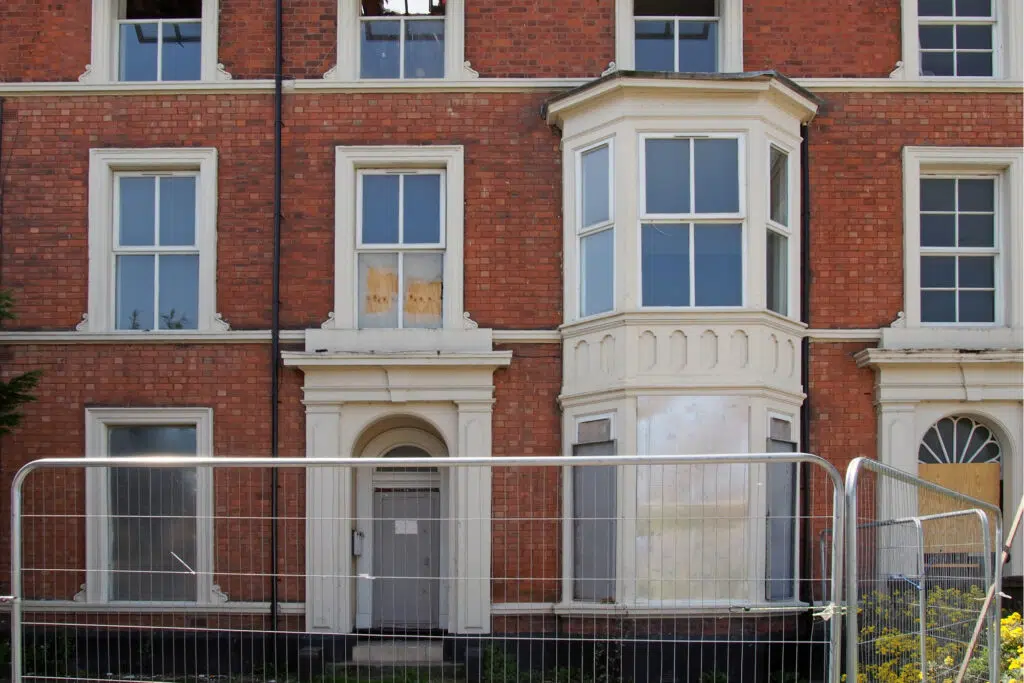
Where a house has fallen into a state of disrepair, a council, under section 17 of the Housing Act 1985, can compulsorily acquire the property.
Applications made under the Transport and Works Act 1992 usually only apply to new railways, tramways and now, guided busways.
In some cases, a property or land may not be part of a CPO, but the property may be subject to Blight. In such cases, compensation may be offered to the landowner, and in some cases there may be an offer to buy the property, subject to certain conditions being met, despite it not being subject to a CPO.
In cases where a property or landowner has already agreed to sell as part of a CPO, Holmes & Hills can offer stand alone conveyancing with a specialist conveyancer dealing only with CPO/DCO properties. Engaging a conveyancer with specialist knowledge of the CPO/DCO area of law often helps to navigate the process.
The team at Holmes & Hills works in partnership with clients, providing strategic advice that from the outset is aimed at achieving the best possible outcome for the client, with consideration for the client's objectives. Most often, achieving the optimum outcome means securing the most favourable financial settlement possible from the acquiring authority, alongside other conditions of negotiation, such as timescales and scope of rights over land to be granted to an authority, or impinged.
Achieving the most favourable result for a client can mean pursuing claims through to hearings in the Upper Tribunal and Lands Chamber. Holmes & Hills has a wealth of experience preparing cases for, and representing clients at, hearings in the Upper Tribunal and Lands Chamber. As is discussed below, Holmes & Hills is recognised as having a team that specialises in planning and property related disputes. This independent recognition is in part due to the Team's experience in civil court procedure at every level and bridging the gap between this and Planning Law. The Team is in experienced representing clients in the County and High Courts, the Property Chamber, the Lands Tribunal and at Planning Inquiries.
The Team's wealth of civil procedure and contentious experience positions them well to advise clients on such legally technical, strategic and contentious matters as Blight, Compulsory Purchase Order (CPO) and Development Consent Order (DCO) claims.
Holmes & Hills' experienced team is able to advise property, land and business premises owners on:
For many years Holmes & Hills has been independently ranked as a leading source of specialist legal advice and representation relating to matters concerning contentious and non-contentious Planning Law and development. Both the Legal 500 and Chambers & Partners - two independent directories of the UK's leading law firms - list Holmes & Hills as a specialist firm in this area of law.
Holmes & Hills is unique in having such a large team of solicitors specialising solely in Planning Law and development related property and land matters. The team comprises two Partners of the firm, two Senior Solicitors, one Consultant (ex-Partner), three Solicitors and one Trainee Solicitor.
As well as the Team being recognised collectively as being a specialist source of legal representation, five of the team are recognised for their individual expertise and experience. Michael Harman (Partner), Steven Hopkins (Partner) and David Whipps (Consultant), who lead the provision of Blight, Compulsory Purchase Order (CPO) and Development Consent Order (DCO) claim services are all individually recognised for their Planning Law expertise.
This independent recognition means clients of Holmes & Hills can be certain they are receiving some of the best legal advice and representation available.
In representing clients in preparing, serving, negotiating and settling Blight, Compulsory Purchase and Development Consent claims, Holmes & Hills is pleased to be able to say that in numerous instances, we have successfully argued for and recovered 100% of the client's legal and professional costs from the acquiring authority. In such situations, any interim bill payments made to Holmes & Hills during the course of the matter are repaid as part of the settlement and no payments are required to be paid by the client at the successful conclusion of the case.
In representing clients our Planning Law solicitors will always seek to maximise the value of the financial settlement achieved under the statutory regime, this including recovery of costs incurred in achieving the settlement.

Where a property or piece of land is likely, in its entirety or in part, to be the subject of a Compulsory Purchase Order (CPO) due to its being required as part of a public development or infrastructure project, the property is considered blighted. Property and land can be negatively impacted by a project due to:
Due to the length of time required to plan, consult and gain the relevant permissions to move forward with a public development or infrastructure project, property and land can become blighted - their value materially negatively impacted (sometimes rendered worthless) - many years before the acquiring authority intends to actually serve a Compulsory Purchase Order on the owner. This can place property, land and business owners in a position where they are unable to sell and move, refinance (remortgage) or plan their business operations due to the likely future Compulsory Purchase Order.
To avoid the owners of affected property, land and businesses having to wait to receive a Compulsory Purchase Order from the acquiring authority and having no control over timescales, owners can serve a Blight Notice. A successful Blight Notice compels the authority to purchase the property, land or business premises; giving the owner more control over timescales, reducing uncertainty which otherwise may have persisted for years.
There is much room for contention surrounding Blight Notices, with potential disputes arising with the authority over whether and to what degree property, land or business premises are blighted. In addition, if an argument is successfully made that property is blighted, or if an authority has acknowledged this from the beginning, there is commonly material disagreement between the owner and the acquiring authority as to scope of the negative impact and the extent effect on the value of the property, land or business premises.
For the owner of any property, land or business affected by a public development or infrastructure project to have the best chance of serving a a successful Blight Notice and maximising the value of the financial settlement received, expert legal advice is required from solicitors specialising in such matters.
The team are recognised for their specialist knowledge and expertise, with Michael attaining individual rankings from both the Legal 500 and Chambers and Partners and Catherine noted as a “key lawyer” by the Legal 500. The Team are also part of the larger Planning Law department within the firm which has been recognised by the Legal 500, Chambers and Partners and The Planner as “…offering broad ‘experience and specialist skills’ on planning and development matters” and being “…a specialist team advising on the planning aspects of residential, mixed-use and commercial developments”.
The Team are proud to be members of the national Compulsory Purchase Association (CPA), with Michael also being a member of National Infrastructure Planning Association (NIPA).


A Mackman Group collaboration - market research by Mackman Research | website design by Mackman